


High-Veg, Low-Fat Diets Prevent Progression, Recurrence of Breast, Colon Cancer


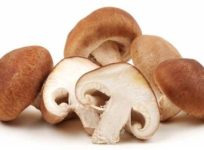
Cancer prevention never tasted so good. Several new studies show that a diet high in fruits and vegetables and low in saturated fats can prevent the recurrence and progression of breast and colon cancer. In the case of breast cancer, the women who benefit most from high-vegetable diets are those with estrogen-receptor negative tumor types. For these patients, nutritional approaches may be the best available prevention strategy. Photo copyright: Marlee. Agency: www.dreamstime.com.

NEW YORK—Data from three new clinical trials show that reducing dietary fat to levels below 20% of total calories, and increasing vegetable and fruit intake can prevent relapses of breast cancer, and reduce colon cancer, reported David Alberts, MD, at a conference on Nutrition and Health, sponsored by Columbia University’s Rosenthal Center for Complementary and Alternative Medicine, and the University of Arizona’s Program in Integrative Medicine.

The findings are welcome news after a long winter of “Low-Fat Diets Don’t Work,” headlines following the relatively unimpressive breast cancer results from the Women’s Health Initiative (WHI) trial. Dr. Alberts, a medical oncologist at the University of Arizona Cancer Center, believes the new data should go a long way toward re-establishing the primacy of nutritional strategies in cancer prevention.

WINS: Cut Fat, Cut Breast Cancer

The first dose of good news comes from the Women’s Intervention Nutrition Study (WINS), a study of over 2,400 women with stage I–II breast cancer. After completing surgery, radiation and/or chemotherapy, the patients were randomized to a low-fat diet (target of no more than 15% total daily calories from fat) or a usual diet control group. Patients, recruited from 37 US centers, ranged in age from 48–79 years; they were followed for five years.

The 975 women in the low-fat group received extensive counseling on diet and nutrition, with coaching and group support to help them adopt the low-fat, high-veg diet. Though compliance varied over the 5 years, most maintained total fat at 20–25 grams per day, versus 50 grams among the 1,462 control patients.

The trial is ongoing, but so far the results are very encouraging. The low-fat diet produced a marked reduction in breast cancer relapse. Thus far, there have been 28 relapses among the 205 low-fat patients (13.6%) who’ve completed the 5-year follow-up, versus 58 relapses in the 273 (21.2%) women in the control group.

Women with the highest baseline BMIs had greater benefit than thinner women. Though weight loss was not a goal of WINS, those on the low-fat diet did show small but significant aggregate weight loss, from a baseline mean of 160.2 lb to 155.6 lb at 5 years; control patients showed no weight loss.

Risk reduction was greatest for patients with estrogen-receptor-negative primary tumors, who showed a 42% reduction of recurrences on the low-fat diet. Given that tamoxifen and other estrogen modulating drugs are out of the question for these patients, “a low-fat diet may turn out to be the best intervention we can offer,” said Dr. Alberts. The WINS trial will likely be published in the Journal of the National Cancer Institute later this year.

WHEL: Veggies Rule!

The Women’s Healthy Eating and Lifestyle (WHEL) trial involves a similar population of women surviving treatment for primary breast cancers. “This is a high-risk population, motivated to change their diet, and who perceive that diet is associated with their initial diagnosis and recurrence risk,” said Dr. Alberts.

They were randomized to keep their habitual diets or adopt a diet including 5 daily servings of vegetables, 3 servings of fruit, 16 oz. fresh vegetable juice, 30 grams fiber, and under 20% of calories as fat. They were followed for 5 years.

As was seen in WINS, the women in the intervention group showed variable compliance with the veg-rich diet, but overall, they were able to keep daily fruit, vegetable, juice and fiber consumption well above the mean in the control group.

Recurrence and survival data have not yet been tabulated, but a sub-study of the WHEL project shows that the high-vegetable diet markedly reduced estrone, total estradiol, and bioavailable estradiol, all of which promote breast tumor formation and recurrence. There is also evidence that the high-vegetable diet increased plasma carotenoid. levels, which correlates strongly with reduced breast cancer recurrence (Rock C. J Clin Oncol. 2005). The diet also produced measurable but non-significant drops in oxidative stress markers (Thomson CA, et al. Nutr Cancer. 2005; 51(2): 148–154).

Rethinking WHI

In light of these findings, it is worthwhile reviewing the allegedly “negative” WHI findings. “If you look at the breast cancer prevention part of the study, there was a 9% reduction in the women on the ‘low-fat’ diet. This was not statistically significant, but putting that in population terms, it translates into about 20,000 fewer breast cancers in the US each year. That ain’t nothing,” Dr. Alberts said.

The reduction is all the more significant given that only a small percentage of women in the “low-fat” group were able to keep fat consumption below 20% of total calories. On average, the low-fat group was eating about 31% of total calories from fat, compared to 38% among controls. “Even this small reduction in fat produced a meaningful reduction in cancer incidence.”

The new data also beg a rethinking of the disappointing ABTC and CARET beta-carotene intervention trials published several years ago showing beta-carotene supplements increased rather than decreased lung cancer rates in smokers.

Though this surprised nutrition scientists, it really should not have. Dr. Alberts cited data from more than 20 years ago showing that at high levels, in oxygen-rich environments, beta-carotene loses its antioxidant effect, and behaves like a pro-oxidant (Burton GW, Ingold KU. Science. 1984; 224: 569–573).

“The lungs are a highly oxygenated environment, and the beta carotene doses were high. Add heat from cigarette smoke, and we were basically giving those patients a pro-oxidant.” Dr. Alberts added that the supplemental beta-carotene doses were many times higher than what is typical in vegetables, underscoring the difference between targeted supplementation and whole foods diets. When it comes to preventing cancer, healthful daily diets are the way to go.

Preventing Colon Cancer

That said, some supplements do seem to have an important role. Dr. Alberts is himself involved in a study of calcium to prevent recurrence of colorectal neoplasms. “Colorectal adenomas are epidemic in the US, occurring in 10% of all people over age 40, and 50% of all people over 70. It is absolutely a disease of Western, industrialized nations, a true product of our environment.” Colon cancer is the second leading cause of US cancer deaths, and carries a 50% recurrence rate in patients surviving primary tumors.

The new trial, part of the Southwestern Oncology Working Group studies, shows that after 5 years, 1,200 mg of calcium per day led to a 32% reduction in recurrence of colorectal adenomas, compared with placebo in patients with prior histories of colorectal cancer. This correlates with earlier studies showing protective benefit from calcium. Other nutritional interventions shown to be effective in preventing colorectal cancer are: selenium, low-fat/high-fiber diet, beta-carotene, and vitamins C and E.

“The best way to treat cancer is to prevent it,” Dr. Alberts stressed. Progression from an initial mutagenic event and early cellular changes to pre-cancerous lesions takes anywhere from 5–20 years depending on the type of cancer, and an additional 10–30 years for progression from premalignant to malignant neoplasia.

Assuming an average latency period of 20–30 years, a reasonable estimate for most solid tumors, there are more than 17 million Americans who are somewhere on the cancer development continuum. “Twenty to thirty years is a big target for those of us who would like to develop interventional preventive strategies.”

Dr. Alberts believes that by putting into clinical practice what is now known about nutrition, exercise, and other lifestyle interventions, physicians could help bring about a 50% or greater reduction in cancer incidence within two decades. “The Institute of Medicine reports that 60,000 cancer deaths per year could be prevented by using what we now know. I’d say it is vastly more than that.”