

Perinatal Probiotics Benefit Preemies, Cesareans & Other Little People

Probiotic supplements and fermented dairy products can prevent and treat many of the digestive, dermatologic and immune system problems of infancy, especially in pre-term babies and those born via cesarean section.

Good science on this subject has been accumulating steadily over the last decade. The latest study to make the news was a metanalysis indicating that probiotics can reduce incidence of and mortality from necrotizing enterocolitis, the most common and deadly gastrointestinal problem in premature babies (Desphande G, et al. Lancet. 2007; 369: 1614–1620).

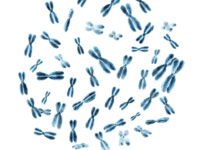
Species of Lactobacillus (left) and Bifidobacterium (right), the main probiotic bacteria in the human digestive tract. Babies normally get them from their mothers during birth and breastfeeding, but premature birth, Cesarean delivery and antibiotic use interfere with the process, predisposing babies to digestive, immune system, and neurobehavioral disorders. These problems are preventable or treatable with probiotic supplements. Lactobacillus photo copyright Monika Wisniewska (www.dreamstime.com); Bifidobacterium stained with ViaGram Red courtesy of Invitrogen (www.invitrogen.com).

There are other recent studies showing probiotics given during infancy or even given to mothers during gestation, can prevent later development of colic, irritable bowel sydrome, staph infections, eczema and possibly even asthma (see Perinatal Probiotics: A Research Review, below).

Gastroenterologists, perinatologists and pediatricians are recognizing the connection between establishment of healthy gut flora in infancy, and digestive and immune system health later in life. They are also learning more about the intimate microbial connection between mother and child.

A mother’s microbial milieu has a profound impact on her baby’s. Anything that interferes with the transfer of healthy bugs from mother to baby—antibiotic therapies, cesarean birth, prematurity—preempts establishment of healthy gut flora in the infant, to the detriment of the baby’s overall health. Fortunately, unlike many things that could potentially go wrong during the perinatal period, these problems are very easy to correct through judicious use of probiotics.

The Forgotten Organ

There are nearly 1,000 different organisms normally living in the human gut. If this interior ecosystem is healthy, no one type predominates and the organisms function synergistically, explained Gary Huffnagle, PhD, professor of internal medicine, microbiology, and immunology, University of Michigan, Ann Arbor.

“One researcher described the gut flora as ‘the forgotten organ.’ In health, the organisms in the digestive tract function together, much like an organ made up of different types of cells. They affect digestion, obviously, but also immune function, neurological function and many other things,” Dr. Huffnagle told Holistic Primary Care.

If the floral “community” is dysfunctional, the various species do not relate well. Some out-compete others. The overall balance and diversity of the system is disrupted, and this can predispose to inflammatory bowel disease, disrupted sleep cycles, atopic conditions, and infection.

Dr. Huffnagle, who recently published a book entitled, The Probiotics Revolution (www.probioticsrevolution.com), grew curious about gut flora while studying immune system responses to pathogenic yeast. He found those responses could be modulated depending on the presence or absence of certain gut organisms. That piqued his scientific curiosity, but it was his baby daughter’s struggle with colic that really kindled his interest.

Maternal Antibiotics Equal Neonatal Problems

“My daughter was born vaginally, but spent a long time in the birth canal. Her mother was on antibiotics at the time, and so the baby was basically absorbing a lot of antibiotics. Soon after she was born she developed digestive problems.”

Until a few years ago, colic was thought to be a mechanical GI dysfunction. But Italian researchers showed that it could be successfully treated with probiotics. “This provoked a major change in many peoples’ thinking, including my own,” Dr. Huffnagle said. His daughter quickly improved after several weeks on a lactobacillus probiotic.

The Huffnagles’ experience underscores a key point: a newborn’s gut flora are largely determined by the mother’s. In utero, the fetal digestive tract is sterile. If born vaginally, the baby acquires organisms present in the mother’s vaginal canal. These should be predominately lactobacilli, which migrate from the mother’s lower GI tract to the vagina.

“On the way out into the world, the baby should be getting a mouthful of lactobacilli. This is very important for getting the digestive tract ready for everything else,” explained Dr. Huffnagle.

Breastfeeding further inoculates the baby’s digestive system with bifidobacteria that normally live in the mammary ducts. Breast milk is also rich in oligosaccharides that nourish good bugs. “Every time the kid breastfeeds, he or she gets a shot of bugs and nutrients important for setting up healthy gut flora.”

But if a woman is on antibiotics during gestation or delivery, and is not taking probiotics or eating live-culture yogurts every day, her gut and vaginal flora will be abnormal, and she will lack the bifidobacteria in her mammary ducts. The baby will not get appropriate organisms during birth and breastfeeding.

“If the mother’s on antibiotics, the vaginal flora are way off,” said Dr. Huffnagle. “Lactobacilli and bifidobacteria are highly susceptible to broad-spectrum antibiotics. Each time a woman takes antibiotics, it’s like an A-bomb for the healthy flora. Probiotic organisms are slower-growing to begin with. The time to re-establishment increases with repeated antibiotic hits.”

He believes it is essential for women on antibiotics to eat yogurt and/or take probiotics every day. “Antibiotics are truly wonder-drugs, but they’re really only half a therapy. You need to take probiotics with them.”

Antibiotic disruption of maternal flora is increasingly common. “Up to 30% of all women are now diagnosed with group B streptococci in their vaginas while pregnant. Most hospitals test for this, and if a woman tests positive, she’s automatically started on antibiotics during delivery,” said Kelly Dowhower Karpa, PhD, assistant professor of pharmacology at the University of Pennsylvania, Hershey. Likewise, women who have premature rupture of membranes are also immediately started on antibiotics.

Probiotics Counter C. difficile

Dr. Karpa experienced this first-hand, and it had devastating consequences on her son. “I was on antibiotics during delivery, and we had some further complications, so my son was on antibiotics for the first 14 days post-delivery. Nine months later he developed a wheezing cough that became asthma. At 18 months, he had an anaphylactic reaction to eggs.”

A few months after his second birthday, he developed severe diarrhea, which turned out to be chronic, relapsing Clostridium difficile. He needed constant antibiotics to suppress the bug.

Not happy with the idea of her son being on antibiotics for life, Dr. Karpa started doing some homework. “The asthma, allergies and C. diff diarrhea all seemed to point back to the fact that he didn’t have the right bugs in his gut to begin with.”

By the time C. diff was diagnosed, her son was seeing five doctors, all of whom viewed probiotics as “too experimental” despite studies showing probiotics could control C. diff. Finally, a physician at Johns Hopkins supported her wish to try a probiotic approach. He recommended the VSL#3 product by Sigma Tau (www.vsl3.com), a combination of 8 strains of lactobacilli and bifidobacteria that has been well-studied in ulcerative colitis, IBS, and ileal pouchitis.

Within a few weeks on a regimen of 2–4 packets of VSL#3 per day, the diarrhea resolved, and has not returned. “It saved my son’s life, and I learned so much in that year about the power of the gut flora.”

The TH1–TH2 Balance

Daily probiotics, including ordinary yogurt as well as supplements, are now a regular part of life for the Karpa family, and the study of probiotics has become a primary focus of Dr. Karpa’s academic and clinical work. In 2004, she published a book: Bacteria for Breakfast: Probiotics for Good Health, to share what she’s learned with physicians and concerned parents (the book is available through Trafford Publishing, www.trafford.com/robots/03-1294.html).

She recently obtained funding to study connections between food allergies in young children, and perinatal events like antibiotic therapy or cesarean section that could potentially disrupt acquistion of healthy gut flora.

“There’s something about lactobacilli and bifidobacteria, perhaps a protein on the bugs’ cell surfaces, that stimulates TH1 immune cell function rather than TH2 function,” she explained. Kids with healthy gut flora tend to have a healthy TH1–TH2 balance; those with abnormal flora are TH2-dominant, and therefore predisposed to allergies and IgE-mediated disorders.

She noted that conventionally trained physicians are starting to understand this. “One of the doctors who laughed at me when I wanted to treat my son with probiotics is now asking me to speak at meetings.”

Prenatal Probiotic Priming

Dr. Huffnagle strongly advises all pregnant women to adopt a diet rich in probiotic foods like yogurt, kefir, buttermilk, as well as soluble fiber, and plant-derived polyphenols like those in green tea and dark-colored fruits & vegetables. “Most antioxidant polyphenols end up in the gut, and act like “prebiotics” supporting growth of healthy gut flora.” Processed foods and refined carbs promote pathogenic flora because these organisms tend to grow faster than probiotic bugs given the same amount of sugar.

Healthy flora will not only support the mother through gestation and delivery; they seem to prevent disease in the child. Three recent studies have shown, independently, that probiotics or yogurt during gestation or given to babies shortly after birth can markedly reduce eczema and other atopic conditions.

Help for Little Caesars

Because they do not pass through the vaginal canal, children born via cesarean section miss the possibility of obtaining their first gut flora from their mothers. This puts them at increased risk for colic and other digestive problems. The problem is further compounded if the child is not breast-fed.

In the absence of healthy organisms, the baby’s gut can easily become overgrown with pathogenic, or at least non-friendly organisms. “There are lots of different bacteria that can be both good guys or bad guys depending on the overall balance of their populations in relation to the rest of the community. Probiotics are like the ambassadors, the community council. They keep other organisms in check and keep the community working well,” Dr. Huffnagle explained.

There is no clear-cut probiotic protocol for cesarean babies, or others who do not aquire healthy bugs from their mothers. But Dr. Huffnagle said a little experimenting will usually lead to a good outcome. The main thing is to make sure the child is getting regular doses of both lactobacilli and bifidobacteria, the two major classes of probiotics, as soon as possible.

Lacto & Bifido: The Cornerstones

He recommended a new liquid formulation of Lactobacillus reuteri, an excellent probiotic strain that was the subject of landmark colic studies by Italian researchers. The product is made by Biogaia, a Scandinavian company, and is being introduced in the US this Fall, by Everidis (www.everidis.com), a new practitioner-level nutraceutical company. The Biogaia drops can be easily added to milk, formula, yogurt, or baby foods, making them a convenient way to give Lactobacilli to babies, said Dr. Huffnagle, who has no relationship with Biogaia or Everidis.

People in the US tend to be more familiar with lactobacilli as a genus, but Dr. Huffnagle believes bifidobacteria are equally necessary. “If you look at the intestines of healthy babies during their first year of life, they are chock full of bifido, so that’s got to be important.”

Two new probiotic formulations will help make it easier to get Bifido into kids’ bellies. Morinaga, a Japanese dairy products company, recently introduced two new perinatal bifidobacteria formulations into the US. Quality of Life Laboratories (www.Q-O-L.com) will be launching the products.

The first, called Brevelon 10, is a lyophilized powder of the M-16V strain of B. breve, a bug with a strong track record in preventing and treating infections, including methicillin-resistant staph, in the neonatal ICU setting. It also reduced the severity of cutaneous symptoms in atopic babies (see Perinatal Probiotics: A Research Review, below).

The second product, yet to be given a brand name, is a triple bifidus combination containing three strains: B. longum, B. infantis, and the M-16V B. breve. In healthy babies, B. infantis and B. breve are highly prevalent in the first years of life, but tend to decline post-infancy. The formulation is designed to mimic that early-stage profile. Quality of Life Labs also distributes a bifidus formulation for adults called Bifilon.

S. boulardii, the Probiotic Yeast

For babies and small children with recurrent diarrhea, Saccharomyces boulardii can be highly effective. This yeast, originally discovered in Southeast Asia, where it proliferates on the skins of lychees and mangosteen fruit, is one of the most widely studied probiotics in the world. There are a number of trials documenting its efficacy in traveller’s diarrhea, antibiotic-induced diarrhea, and, importantly, C. difficile-induced diarrhea.

“It produces an enzyme that inactivates the C. difficile toxins,” explained Dr. Karpa. “For patients who have had a very intense C. diff problem, I recommend S. boulardii for 4 weeks, and then add lactobacilli and bifidus.”

S. boulardii is the only probiotic organism that is not a bacterium,” said Dr. Huffnagle, who added that it has advantages over bacterial probiotics in that it is very stable at room temperature and is not affected by antibiotic drugs. It is sold under the brand name, Florastor, by Biocodex, a French company that has made the product since the 1940s (www.florastor.com).

S. boulardii functions differently than lactobacilli or bifidobacteria. “It doesn’t really colonize the human gut. It only lives there for a week or two, kind of like a substitute teacher. It keeps pathogens in check, and then it goes away. I think it probably assists proliferation of lactobacilli and bifidus.” Some purists would argue that since it is not a natural part of the human gut flora, it is not a true-blue probiotic, but that’s a matter of semantics.

Though effective in clearing neonatal diarrhea, it may not be the best choice for premature infants, especially in the NICU setting. There is a handful of case reports of systemic yeast infections associated with this product in the adult ICU setting. Given the wide availability of other effective bacterial probiotics for preemies, there’s no need to take even that very small risk.

Overall, the future looks bright for perinatal probiotics. A number of NIH-sponsored trials are underway, and probiotic-fortified baby formulas are on the horizon. In many respects, probiotics represent a triumph of holistic medical thinking.

“In traditional Chinese medical philosophy, it is said that the gut is the center of health,” said Dr. Huffnagle. “If we can understand the flora, we can bring together many aspects of both allopathic and alternative medicine.”


Feelin’ the Strains: Choosing & Using Probiotics

The growing interest in probiotics is fueling rapid proliferation of probiotic products, which can make it hard for patients to find something that will help them. Like the GI environment itself, the probiotic section of a health food store or pharmacy is colonized by a host of different products, some beneficial, others bogus.

Fortunately, none are likely to be harmful, said Dr. Huffnagle. “Probiotics are safe—they’re essentially freeze-dried, concentrated yogurt—so the worst thing that will happen is the patient will buy an inert product that won’t work. All they’ll lose is a bit of money.”

With a little guidance and careful shopping, though, people can usually find something that will work for them. The two big issues, are what types of bugs are contained in the formula, and how much gets delivered to the intestine.

Dr. Huffnagle and Dr. Karpa both prefer products that require refrigeration. “The statistics show that if probiotics sit out on a shelf at room temperature, they lose 25% or more of the viable bacteria within the first four months,” Dr. Karpa told Holistic Primary Care. “No refrigeration necessary” products tend to have shelf lives of no more than 6 months. Check expiration dates carefully!

Speaking of dates, a quality product should state clearly the number of bacteria per dose guaranteed through the expiration date. Figures stating, “CFUs at the time of manufacture,” mean absolutely nothing, she said.

Dr. Huffnagle said he likes to see clear label information on dose of each type of organism in CFU terms. “Weight measures are worthless.” In the context of perinatal care, he wants to see combinations of lactobacilli and bifidobacteria in a formula that gives 5–10 billion CFU of the organisms per dose. “That’s the dose level you see in most of the studies.” One exception is the Biogaia liquid form of L. reuteri, which gives good colonization at lower CFU levels.

While price is not a definitive guideline, one can safely bet that no-frills bargain brands probably do not work. Quality production is not cheap, and good products carry a higher price-tag.

Dr. Huffnagle, who said he has no industry ties, praised manufacturers like Therabiotics, makers of the Theralac line (www.theralac.com). “All they do is probiotics, and they provide detailed information so you can track a bottle back to the production lots. You know exactly what’s in it and where it was manufactured. They are a model of good quality control.”

Following a few simple guidelines when administering probiotics will help optimize their effects. Dr. Karpa recommends giving probiotics on an empty stomach, at least 1 hour before a meal (or feeding, in the case of a baby), or at least 2–3 hours after.

Older children or adults using probiotic capsules should use non-chlorinated water as a chaser. Bottled spring water or filtered water is a better choice than chlorinated tap water. “The chlorine will kill a lot of the bugs,” she said.

Probiotic supplements alone will only go so far. For optimal results, patients have to keep up a healthy diet. “It’s like planting a garden,” said Dr. Huffnagle. “You need to keep re-seeding and re-feeding and weeding in order to keep the plants you want growing healthy. You do that by eating a good diet.”


Perinatal Probiotics: A Research Review

There’s growing evidence to support the use of probiotics and fermented dairy foods to prevent and treat a variety of neonatal and early childhood disorders. Here are a few key studies:

Preventing Necrotizing Enterocolitis

This inflammatory disorder is the most common serious GI problem in premature infants, killing an estimated 5,000–10,000 newborn each year. Girish Deshpande and colleagues at the King Edward Memorial Hospital for Women, Subiaco, Western Australia, analyzed 7 randomized, controlled trials of probiotics to prevent the condition. The pooled data represented 1,393 infants born at 33 weeks’ gestation or less, and at birthweights below 1,500 grams.

The trials used different oral probiotics, though most contained strains of lactobacilli and bifidobacteria. In all trials, treatment began within the first 10 days of life and continued for at least 7 days.

In aggregate, there was a 74% reduced incidence of necrotizing enterocolitis in the probiotic-treated babies, and a 53% drop in mortality (Desphande G, et al. Lancet. 2007; 369: 1614–1620). The probiotic babies also began full-feeding an average of 3 days earlier than controls. Positive probiotic effects, though differing in degree, were seen in all 7 trials, a remarkably consistent result despite the differing regimens. There were no adverse effects in any of the studies.

Prenatal Probiotics Nix Neonatal Atopy

Researchers at the University of Turku, Finland, randomized pregnant women with family histories of atopic eczema, allergic rhinitis, or asthma to receive either placebo or a daily prenatal supplement of Lactobacillus GG. They also gave placebo or the Lactobacillus to the infants for the first 6 months of life.

By age two, 31 of the 68 placebo-treated children (46%) had been diagnosed with atopic dermatitis, compared with only 15 of the 64 probiotic-treated kids (23%). There also appeared to be a reduction in incidence of asthma and allergic rhinitis, but the numbers were to small to be statistically significant (Kalliomaki M, et al. Lancet. 2001; 357: 1057–1059).

More recently, University of Helsinki researchers randomized over 1,200 pregnant women carrying children at increased risk of allergic disease to either placebo or a 4-strain probiotic along with prebiotic galacto-oligosaccharides for 2–4 weeks prior to delivery. The primary endpoint was cumulative incidence of allergic diseases (food allergy, eczema, asthma, allergic rhinitis and IgE sensitization) in the babies by age 2 years.

While there was no overall reduction of allergic diseases, the probiotic did cut IgE-associated disorders by 29%. Eczema incidence was lowered by 26%, and atopic eczema was reduced by 34% (Kukkonen K, et al. J Allergy Clin Immunol. 2007; 119(1): 192–198).

Probiotics can be effective even in babies that already have atopic symptoms. Dr. Kazuhiro Hattori and colleagues at the Kansai Medical University treated 15 infants with atopic dermatitis using a lyophilized form of Bifidobacterium breve (M-16V); seven equally atopic infants served as controls. The probiotic, available in powder form, was added to milk and fed to the infants at a dose of 1.5 × 10⁹ CFU, thrice daily. The control babies were fed the milk without the probiotic.

After one month, the probiotic-treated babies showed a median 3.5-point improvement on total allergic symptom and cutaneous allergic symptom scores, as assessed by physicians. In some cases, atopic symptoms were resolved completely. Only minimal improvements were seen in the untreated babies (Hattori K, et al. Japan J Allergol. 2003; 52: 20–30).

L. reuteri Bests Simethicone for Colic

Dr. Francesco Savino and colleagues at the University of Turin have pioneered the use of L. reuteri in prevention and treatment of colic. Recently, they compared an L. reuteri supplement providing 108 live bacteria daily against simethicone, 60 mg/d, in 90 breast-fed colicky infants. The babies were treated for 28 days, and parents were taught to monitor crying times and frequency, an indicator of colic symptoms and severity.

After the first week, there was already a measurable advantage of the probiotics over the drug. Daily median crying time was 159 minutes per day in the probiotic group versus 177 minutes in the simethicone group. By the end of the month, the difference was vast: median crying time was 51 minutes per day in the L. reuteri treated babies but 145 minutes per day in the simethicone group (Savino F, et al. Pediatrics. 2007; 119(1): e124–e130). As any new parent can tell you, 90 minutes less of colicky crying is a huge improvement in quality of life!

Controlling MRSA in the NICU

Methicillin-resistant staph (MRSA) is a major problem in neonatal intensive care units worldwide. Physicians at the Sagamino Hospital in Japan treated half of a cohort of 266 preterm infants with lyophilized M-16V B. breve (the same probiotic used in Hattori’s atopic dermatitis study). Prior to probiotic treatment, 30.5% of the infants were MRSA carriers, and 9.5% had MRSA-associated toxic-shock syndrome-like exanthematous disease. After one month of daily probiotics, those numbers were greatly reduced to 12.3% and 2.2%, respectively. The untreated babies showed no such changes (Yamada T, et al. Acta Neonatologica Japonica. 2002; 38: 294).

Yayoi Sato and colleagues at Juntendo University Hospital gave the B. breve probiotic to 75 severely preterm infants weighing less than 1.5 kg, with a mean gestational age of under 28 weeks. Eighty-seven similarly premature infants were designated as controls. They found a number of measurable health benefits.

For one, the treated babies had fewer infections. Clinically significant infections developed in 33 of the 87 non-treated babies (38%) compared with only 20 of the 75 treated infants (27%) (Sato Y, et al. Acta Neonatologica Japonica. 2003; 39(2): 247). Moreover, the treated babies were quicker to reach the point where they could take enteral nutrition at the level of 100 ml/kg/d (mean of 15.3 days versus 19.8 days). They also had shorter hospital stays (mean of 89.6 days versus 102.3 days), a finding that has major economic implications.

Beating Bacterial Vaginosis May Prevent Preterm Labor

Though there are not yet enough data to definitively prove maternal probiotics can prevent preterm labor, there is evidence that they can reduce bacterial vaginosis, a common cause of pre-term labor. In women with BV, risk of preterm labor is in the range of 30% to 50%

The Cochrane Collaboration recently published a systematic review of 4 studies of oral yogurt or fermented milk probiotics to prevent pre-term labor. One study was still ongoing at the time of analysis; a second was excluded due to insufficiency of data collected. Pooled data from the two included trials showed an 81% reduction in vaginal bacterial infections, a highly significant finding (Othman M, Neilson JP, Alfirevic Z. Cochrane Database Syst Rev. 2007 Jan; 24(1): DC005941).

Gregor Reid, PhD, a microbiologist at the University of Western Ontario, and a leading probiotics researcher, believes this approach is worth a try, given there are really no down-sides to maternal probiotics. In an article in the American Journal of Obstetrics & Gynecology, he stated, “certain lactobacilli strains can safely colonize the vagina after oral and vaginal administration, displace and kill pathogens including Gardnerella vaginalis and E. coli, and modulate immune response to interfere with the inflammatory cascade that leads to pre-term birth” (Reid G, Bocking A. Am J Obstet Gynecol. 2003; 189(4): 1202–1208).

He called for greater funding of clinical trials, “to evaluate how best to use the commensal organisms that, after all, make up more of our body than human cells, and without which none of us would survive.”

For more on probiotics for digestive and immune system health, join www.holisticprimarycare.net, and search “probiotics”.