


“Nations, like individuals, have myths rooted deep in their histories– myths that are always contradicted by their complex realities.” –Parker Palmer – Healing the Heart of Democracy
“Is there any relevant family history?”
It’s one of the first questions that doctors ask new patients, and with good reason: a person’s family history often gives important insights into the drivers of the “chief complaint,” and it hints at possible directions for restoring health.
In much the same way, our families’ histories—the stories of our ancestors– hold clues for healing the psychological and social discord now rampant in our communities.
To heal the soul of our fractured nation, we must look into the wounds of our individual and collective past, and become present to them.
Minding the Gap
This year marks the 400th anniversary of the Mayflower landing at Plymouth Rock. With the arrival of pilgrims, began the myth of the Thanksgiving which has served to inspire–and disappoint–countless Americans of every generation.
A myth always points to an aspiration. Like all aspirations, Thanksgiving challenges us to reckon with the distance between the wished-for ideal and the truth as it is in the here and now.
Thanksgiving is a quintessentially American Rorschach test. It holds the power to reveal our hopes, dreams, and heartbreaks—the ones within ourselves, within our families, within our nation.
Our family histories–the stories and myths that shape our individual, familial, and collective identities–are full of triumphs and traumas, dreams and disappointments, sacrifices and suppressions, super-human strengths and all-too-human failings.
Stories, Spoken and Unspoken
For many families, the most important stories are to be found in the silences— the words not spoken, the names not mentioned, the things we would prefer to forget, if only we could. But we cannot. The unspoken truths haunt us through the generations.
Over the past few years, I started learning that many indigenous American communities consider Thanksgiving to be a National Day of Mourning, not a day of celebration. I’ve noticed a lot of articles about “the untold story of Thanksgiving”, or “everything you learned about Thanksgiving was wrong.”
For Native Americans, who bear the long and painful history of persecution, dispossession and marginalization at the hands of the European colonists, Thanksgiving has an entirely different resonance from the meaning it has for other Americans.
Their experience—from the other side of that mythical Thanksgiving table—underscores that gap between the ideal America as a land of peaceful accord between diverse people, and the harsh truths about our history and our present-day situation.
For those of us whose ancestors came to this country long after the period of colonization and westward expansion, the meaning of Thanksgiving has still different meanings. Our forbearers were not present at Plymouth Rock. We are not part of the founding myth. And yet we are part of the tale, as we write ourselves into the ongoing saga of America.
Thanksgiving offers us all an opportunity to reset the table, so to speak; to open a space for all of our many stories to be heard, honored, and integrated into the broader American story.
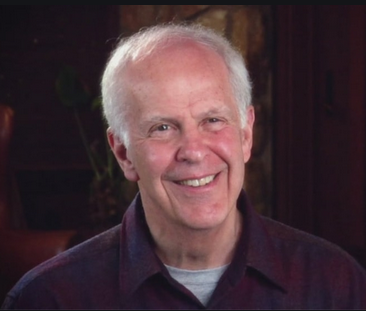
In his book, Healing the Heart of Democracy, sociologist Parker J. Palmer writes: “Democracy demands that we become engaged with “the other” as well as with “our own kind”, with the stranger whose viewpoint, needs, and interests are likely to be different from our own.”
The healing of our nation begins with the telling—and hearing– of our stories.
So, let’s reset the holiday table.
Acknowledge the Pain
The first step in healing is to acknowledge the problem.
Let’s face it: our national body is aching this year. Nearly 7% of our American brothers and sisters—more than 23 million people– are unemployed. We’ve collectively lost over 255,000 family members to COVID-19. Half of the country is heartbroken and in fear about the direction of the government leadership. The other half is reeling from the policies of the last four years.
Our collective nervous system is working overtime, taxed with the challenge of making us all feel safe amidst the discord. It is hypervigilant, sensing danger everywhere and acting erratically. Many of us yearn to be close, yet we’re in the midst of a pandemic that can only be contained if the majority of us maintain social distance.
When we feel safe, we’re able to connect with one another. We feel free to be curious and creative. Our breaths are full and deep. We’re able to take in conversations, to bask in the warmth we see in the faces of our friends and loved ones. We can tune out distractions, we can focus on being in the here and now.
When we feel threatened, we react with anger, or we can also shut-down, and become numb, hopeless, and despondent.
One need not look very far these days to recognize that many people are stuck in the latter mode.
In his insightful article entitled, Soul Sickness: A Frequently Missed Diagnosis, Dr. Charles R. Perakis writes: “Soul sickness or demoralization, is characterized by feelings of hopelessness and helplessness and a perceived sense of incompetence. This condition typically involves vague, unexplained physical symptoms….Patients with this condition require a restoration of their morale and hope.” (Perakis CR. J Am Osteopathic Assn. 2010)
The prevalence of this particular illness has truly reached pandemic proportions.
As it is with individuals, so it is with families and groups. The world is fraught with groups that— in the interest of self-protection—shut down, become insular, and perpetuate the belief that anyone outside the group is a threat. The criteria can be racial, ethnic, religious, political or economic, but the end result is the same: a narrowness that gives a brittle sense of protection at the expense of true security.
Integrating the Past
Ninety-eight percent of all American citizens are either immigrants themselves or the descendants of people who arrived on this continent from elsewhere at some point in the last 400 years.
For some, the decision to come here was a choice freely made. For still others, it was a “choice” but only because the alternative choices meant death, starvation, or indentured servitude. For still others—like the millions of Africans taken here as slaves—the journey was forced.
Regardless of the reasons, one of the unintended consequences of migration is the loss of culture, story, and cultural identity. These losses can be very deep, and with far-reaching impact.
Researchers who conducted longitudinal studies in migration and immigration, have concluded that individuals who migrate experience multiple stresses that can impact mental well-being, social support systems, and changes in identity. And that’s on top of the blunt physical traumas that many immigrants experience on the journey.
In a 2013 study of adolescent migrants, about 30% of the population sampled experienced trauma in the process of migration.
It is not just culture and identity that is passed from generation to generation. Our bodies contain information passed on from our ancestors – including certain stress levels, hormone levels, gifts, as well as learned trauma responses.
Whether we realize it or not, we carry, in our very marrow, the experiences of the previous generations. And the unspoken stories, the unhealed traumas, have a way of perpetuating themselves until someone in a family’s line is willing and able to face the truth.
Meditation teacher Thomas Hubl, who has done considerable work around issues of collective trauma, speaks about family history in two categories: integrated and unintegrated. When a history is integrated, we know the stories, and even if they are difficult, they help us to maintain a positive connection with our past.
When a history is unintegrated, we experience blocks in connecting with the past. For many people, this creates strange and difficult-to-define feelings of stress and isolation.
Curiosity and Care
Reckoning with our family histories—especially if they contain a lot of trauma, violence, fear, and loss—is no trivial matter. It must be done with respect and care.
An encounter with the unintegrated past, naturally triggers a fight or flight response. It’s uncomfortable to come into contact, and to make space to feel that which our ancestors have been trying to bury for generations.
But when you bring a witnessing presence to that which is uncomfortable, and draw upon the support of millions of people all over the world who are also doing the work of collective trauma—it becomes possible to ease that sense of threat, and ultimately to release the unconscious tension around it. This ultimately enables us to become kinder, more sensitive, and more caring to ourselves, and to each other.
Facing the FACTS
Over the last few years, I have been working on a set of tools to help families connect with their histories, their ancestors, and their stories. I’ve practiced these with my own family, and Thanksgiving provides an ideal opportunity to do this sort of soul work in a fun and loving way.
First, unpack the FACTS of your family’s arrival to America: Learn about and talk about your ancestors:
- Family Member Names
- Ages
- Country of Origin
- Traits of Family Members
- Stories – What are the stories of your ancestors? How did you access these stories? How do you tell them? How do these stories inform how you live?
- Did your ancestors come to America as refugees of war? Desire for religious freedom? Economic need? Did they choose to come to America or were they forced or coerced?
- Were they fleeing unsafe conditions in the places from which they came? What were those conditions?
- Did your family actively try to forget their language and culture upon arrival to America? Did they actively hold on to culture? Did they feel conflict and tension about being between worlds?
- What were the costs of integrating into this new country? What were the benefits?
- What did your ancestors feel about being in America? What is your own relationship with being an American?
- If your ancestors were sitting with you now, what might they say to you? What do you wish to say to them?
- What do you hope to contribute to the ongoing story of your family in America? What is difficult for you in finding your place this story?
These questions, asked with curiosity, care, and a humble heart, can sometimes be truly transformative.
De-Othering
It is so easy to fall into the mindset of viewing people as threats, as hostile and unfriendly “others.” We all do it to some degree, and most of the time we’re not even conscious of it. We even do it with our own relatives.
In truth, most of us have to unlearn this “othering” consciousness and learn how to see ourselves as interconnected.
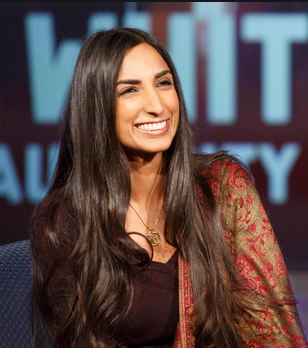
Civil rights attorney Valarie Kaur, the author of See No Stranger, speaks eloquently about the ways in which the othering process is playing out in our society.
“Think about it, here in the United States, it’s Sikh and Muslim as terrorists. It’s Black as criminal. It’s Latinx as illegal, Indigenous as savage, Jews as unwanted, queer people as immoral, women and girls as property. If we are in an instant seeing each other through such filters, that prevents us from the ability to wake up to the truth that our separation is an illusion. That we are part of one another that we do not yet know.”
The good news, Kaur says, is coming from the world of neuroscience. Recent discoveries in brain research are telling us that we can consciously retrain how we see other people. We can learn to recognize our interconnection.
“I’ve developed this very simple practice that I’ve been practicing for 10 years now. When I walk down the street, when I see faces of other people on the street or on the screen, I say to myself, “Sister, brother, aunt, uncle, sibling, child.” I begin to retrain my mind to see others as part of my family. You are a part of me I do not yet know.”
That’s a good one to bring to the Thanksgiving table, or to the family Zoom tonight!
Rewriting the Past
The national holiday that we now know as Thanksgiving did not begin in colonial Massachusetts. The first Americans to celebrate it belonged to the generation that lifted themselves up out of the carnage of the Civil War.
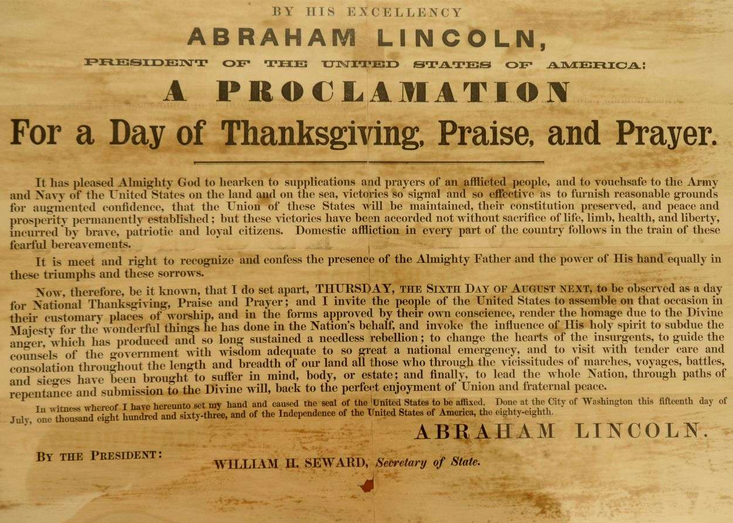
In 1863, just a few short months after the deadliest combat on American Soil – the Battle of Gettysburg –Abraham Lincoln sought to engender unity and comfort to a brokenhearted country.
He urged: Let Thanksgiving be a day of Thanksgiving and Prayer to “heal the wounds of the nation.” He asked all American to call upon the divine qualities of humility and tenderness, and to pray for those in the nation that “have become widows, orphans, mourners, or sufferers in the lamentable civil strife”.
Lincoln offered a prescription for healing in his Thanksgiving Proclamation
- Offer Thanksgiving
- Offer Prayer
- Offer Compassion – feel with those who have been impacted by the war
Let’s keep Lincoln’s advice in mind this year, as we reckon with our present situation.
Oscar Wilde once jested, “the only job of the future is to rewrite the past.”
As we continue to grow as individuals in a multi-cultural nation, and as we search for a more complete story of our past, we begin to change the future. When it is told, when it is truly heard, history need not repeat itself.
This is the time to question the oversimplified stories of our past, and to expand the story of Thanksgiving to include more perspectives—especially those that have been shut out in the cold for so long.
Here are a few other tips that I’ve found useful for making Thanksgiving a deeper and more meaningful experience:
- Use name plates with people’s names and, “daughter of,” “son of,” or “grandchild of” and then add the name of an ancestor.
- Involve the children in telling these stories. Create an activity that engages their learning and their voices. Ask the oldest child present to share a personal teaching story with the family. Maybe it’s something that s/he grew up with, maybe it’s something that a grandparent said. Offer a toast to the oldest.
- Encourage the youngest child at the table to ask questions of the oldest person there. Let the young ones repeat back what they heard, and see if they can tell the stories.
- Explore your family values that have been passed to you from your ancestors. How would you like to pass them on to your children?
- Ask if anyone knows any songs, lullabies, poems, or family treasures that were passed down?
- Make a Thanksgiving feast of the traditional foods of your ancestors, and research the stories of these foods
- Try an old recipe, and also include a new recipe
- If you have them, use heirloom plates and silverware
- Find out the name of the watershed where your ancestors used to live, and the name of the watershed where you currently live. Water is life!
- Celebrate all the people who have ever celebrated Thanksgiving with you before by putting their names on a special table runner
- Bless the food, and make a toast to your family
- If you touch upon something uncomfortable or challenging, recognize that you are touching your “unintegrated past.” See if you can bring presence and safety to yourself and your loved ones as you explore these precious stories.
END
Miriam Rubin is a Somatic Practitioner, American Interfaith Minister, and Purpose Guide™. Miriam is a 4th generation New Yorker, living on Lenapehoking territory. She lives in profound gratitude to her Ashkenazi Eastern European Jewish ancestors who immigrated to America at the turn of the century. www.miriamswellness.com