
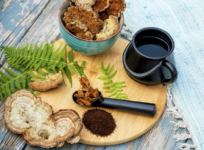

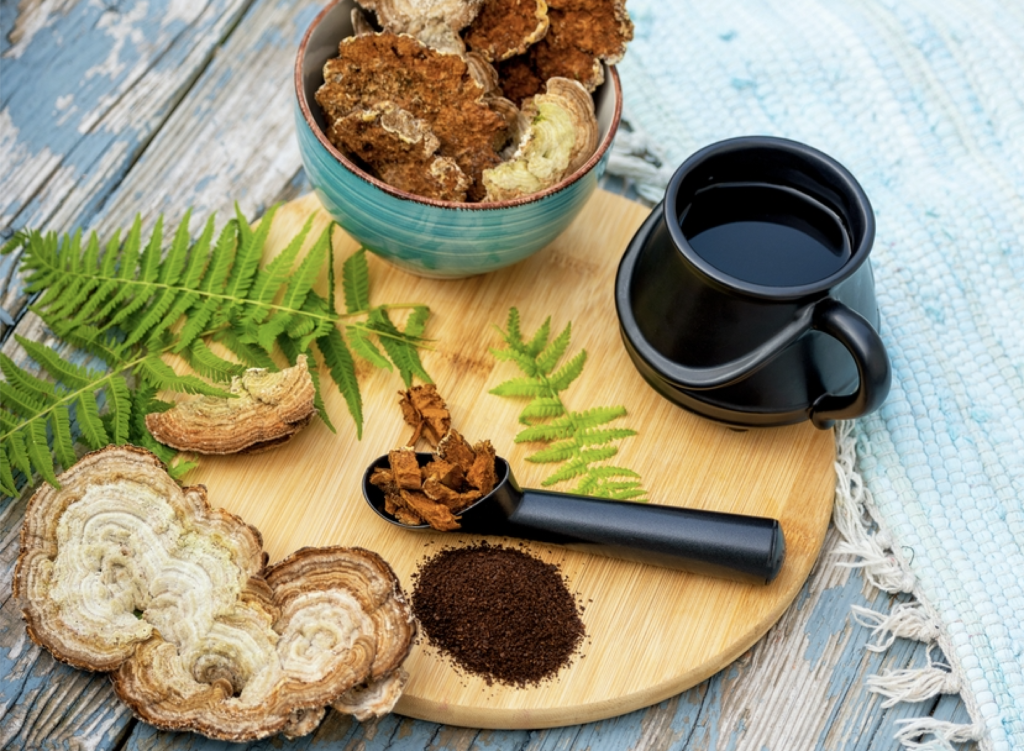
Medicinal mushrooms are hot these days. Not only are people downing more mushroom capsules, powders, and gummies than ever before, but mushrooms have finally breached the coffee barrier and moved into other functional beverages like hot chocolate, energy drinks, and kombucha, as well as foods like chocolate bars, jerky, and snack bars.
The surge is measurable. According to Grandview Research, the global market for mushroom extracts was valued at just over $13 billion in 2024 and is projected to nearly double by 2030. The popularity of mushrooms was on full display at the nutritional supplement industry’s largest annual trade show, SupplySide Global, last fall. One veteran executive named the category as one of the 10 emerging supplement trends.
Despite the buzz, the medicinal mushroom category is rife with confusion. Consumers are unsure which mushroom to take, which fungal part to look for, and whether to choose products made from whole mushrooms or fractionated extracts. Making matters worse, identical product names often mask very different compositions that are presented as interchangeable, even though they are not.
Rather than getting tangled in all the competing mushroom debates, clinicians can look to the clinical research for clarity.
Heated Debates
There are numerous debates raging in the mushroom community. Perhaps the most contentious is the argument about the physiological effects of fruiting body versus mycelium.
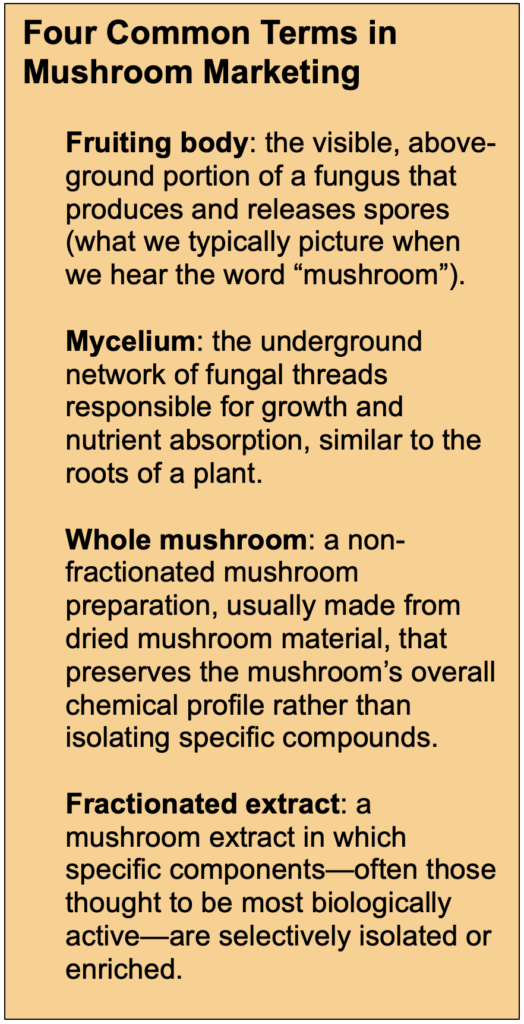
For decades, mushroom supplements have been produced from mycelium (the vegetative, root-like part of a mushroom), which has several practical advantages over fruiting bodies: it grows faster, produces higher and more consistent yields, is easier to standardize from batch to batch, and is well-suited to extraction and fractionation.
But recently, supplements made from the fruiting body have been gaining market share. This rise is driven in part by claims that they are more potent than products derived from mycelium, which are usually grown on grain substrates that cannot be disentangled from the fungal material during production and therefore remain in the finished product.
Another debate centers around which composition is superior: whole mushroom powders or fractionated extracts. Proponents of whole mushrooms believe in the synergy of nature, pointing to an “entourage effect” said to occur when a broad spectrum of fungal constituents is preserved in their natural ratios. Those in the fractionated camp argue that some mushroom compounds are more bioactive—and therefore more beneficial—than others, so isolating them from the rest of the fungus creates a more powerful product.
Without examining the research, these debates are just exercises in philosophy. A thorough look at several leading mushroom categories can shed light on how debates over form and fraction play out in the real world.
Turkey Tail, PSK, and PSP
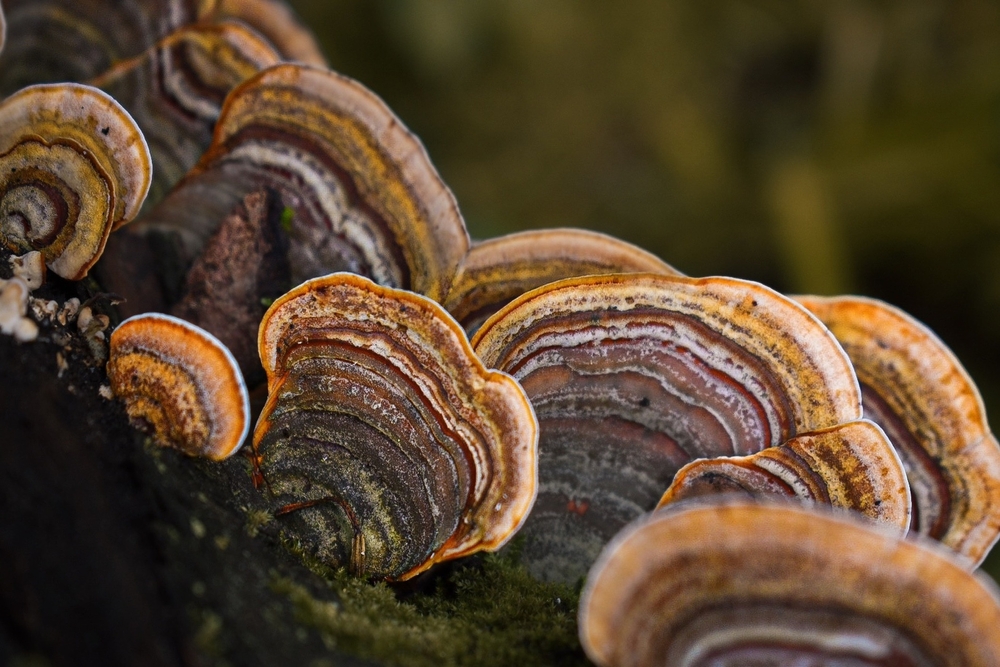
Turkey Tail (Trametes versicolor (formerly Coriolus versicolor)), has a long history of use in traditional Chinese medicine (TCM) for reducing phlegm, treating pulmonary and gastrointestinal disorders, and supporting vitality and recovery from illness. Over the past several decades, the mushroom has also gained a reputation for preventing cancer and aiding recovery. However, there is wide variation in composition among products labeled “turkey tail.”
Whole mushroom preparations more closely resemble traditional Chinese remedies than fractionated extracts. Importantly though, turkey tail was traditionally used as a restorative tonic—not as a treatment for tumors. Studies showing anti-cancer activity have focused on specific polysaccharide fractions, namely PSK and PSP.
PSK, short for polysaccharide-K, is a proprietary standardized extract of a unique strain of Trametes versicolor, commercially known as Krestin®. Approved in Japan for use as an adjuvant therapy for cancer, it has mainly been studied as an adjunct to conventional treatments chemotherapy and radiation in patients with gastric, colorectal, and lung cancer.
The research has consistently shown that PSK improves cancer survival rates and decreases the likelihood of recurrence. One meta-analysis of three randomized controlled trials involving 1,094 colorectal cancer patients found that Krestin, used alongside chemotherapy, significantly improved 5-year survival, as evidenced by approximately 29% lower odds of mortality and 28% lower odds of recurrence.
PSP (polysaccharopeptide) is another polysaccharide extract from Turkey Tail; however, it is not interchangeable with PSK. Whereas PSK has been evaluated in large, randomized human trials designed to assess clinical outcomes, most PSP studies had a more limited focus on immune system modulation.
The takeaway? To realize the adjunctive oncology benefits reported in human studies, the evidence supports the use of PSK—not generic turkey tail products or PSP.
Lion’s Mane, Hericenones & Erinacines (oh my!)
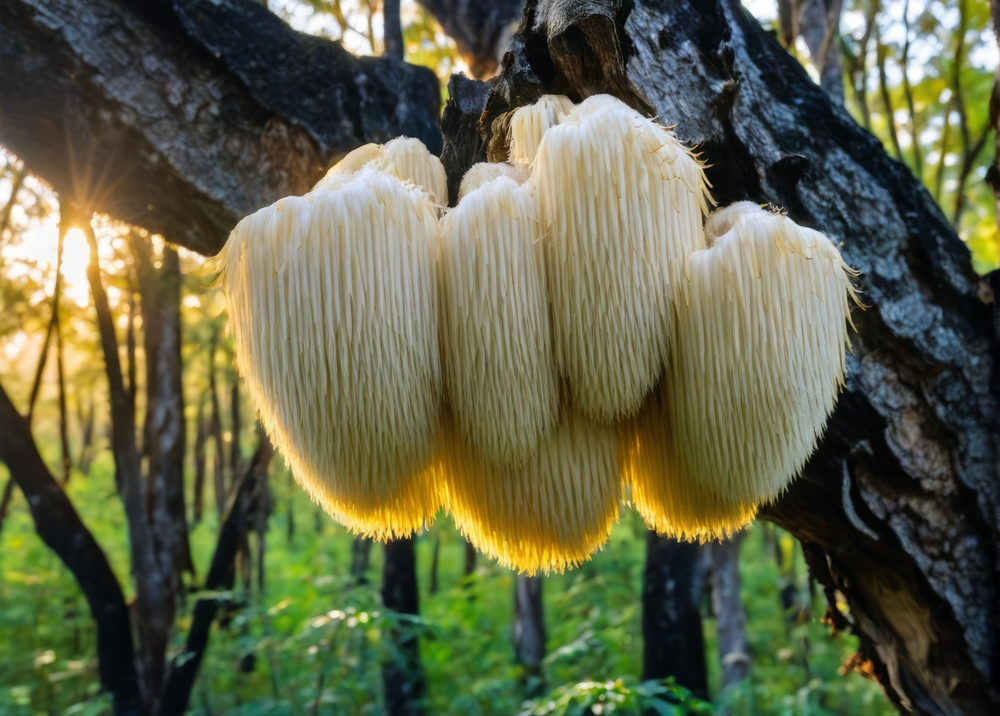
Lion’s Mane (Hericium erinaceus) is one of today’s buzziest mushrooms. It was traditionally used in China to support the internal organs, increase overall vitality, and improve digestive function. Starting in the 2010s, the mushroom experienced a meteoric rise in worldwide popularity, thanks to reports that it stimulated the synthesis of nerve growth factor (NGF). Given the aging populations in industrialized nations, and surging public concern about cognitive decline, this research was met with great enthusiasm.
Yet, as with Turkey Tail, the myriad Lion’s Mane products currently on the market are not interchangeable.
The NGF research that started the Lion’s Mane craze was conducted on specific compounds, namely hericenones (found in the fruiting body) and erinacines (found in the mycelium) isolated from the fungus. The problem is, there are no commercial preparations of these isolated compounds, and because standardized analytical methods and certified reference standards are lacking, most Lion’s Mane extracts do not guarantee specific amounts of hericenones or erinacines.
Further, the original study demonstrating increases in NGF was an in vitro experiment using cultured rodent astrocytes. The NGF effect has yet to be shown in humans. But that didn’t seem to bother cognitive health enthusiasts or the companies that market to them.
Commercially available Lion’s Mane products include whole-mushroom preparations—made from both fruiting body and myceliated grain—as well as water and alcohol extracts. The published human clinical studies of Lion’s Mane have evaluated whole-mushroom preparations—not isolated hericenones or erinacines, as in the original 2010 study showing NGF effects.
Two small, well-controlled trials have found that Lion’s Mane has cognitive benefits for adults over 50. In one study, daily supplementation with 1,000 mg per day of Lion’s Mane in tablet form, for 16 weeks, significantly improved cognitive function scores in men with mild cognitive impairment.
In another study, an unspecified fruiting body–only supplement (1.6 g twice daily for 12 weeks) improved Mini Mental State Examination scores, although the researchers observed no benefits on other cognitive tests. A third double-blind study suggested that one proprietary blend of Lion’s Mane fruiting body and mycelium improved performance speed and reduced stress in healthy young adults.
The bottom line? To see the cognitive effects reported in human studies, look to whole-mushroom preparations in dosages of 1.0-1.8 grams daily.
Shiitake, AHCC® & Active Hexose Correlated Compound
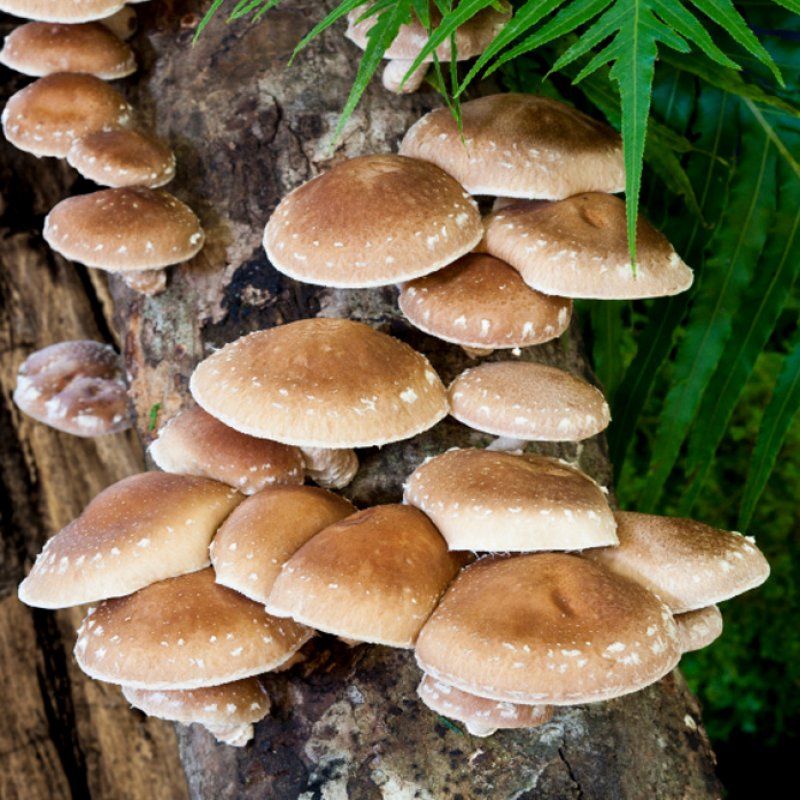
Whether consumed as food or medicine, Shiitake mushrooms (Lentinula edodes) have been valued in China, Japan, and Korea for millennia. In TCM, Shiitake is said to nourish the blood and tonifies the Qi—supporting the body’s core sources of energy and vitality.
Dietary supplements made from Shiitake are commercially available as whole mushroom preparations, as well as a range of extracts, which should not be confused with one another.
By far, the most researched Shiitake-derived ingredient is AHCC®, a proprietary cultured extract of mycelia developed in Japan. AHCC® is supported by more than 30 human clinical studies and over 100 peer-reviewed publications indexed in NIH’s PubMed database. Collectively, this research shows that AHCC® modulates immune function—most notably by increasing the number and activity of natural killer and dendritic cells—with clinically significant benefits for patients with cancer, human papilloma virus (HPV), hepatitis, and other infections.
The most recent AHCC® study, published in Frontiers of Oncology, examined its ability to clear HPV in 50 women with persistent high-risk infections. After six months, nearly two-thirds of participants taking 3 grams of AHCC®, once daily, were HPV-negative, compared with just 10% of those receiving placebo.
One could be forgiven for assuming that AHCC® is an acronym for “active hexose correlated compound;” however, that’s incorrect. An unfortunate result of poor naming practices in the early scientific literature, “active hexose correlated compound” (or “active hemi-cellulose compound” as it was also called) is actually just a small fraction of AHCC®.
A recent compositional analysis showed the active hexose correlated compound fraction to be present in quantities of under 100 parts per million in samples of standardized AHCC®. At that level, it is more of a marker compound than a bioactive fraction, and it has never been isolated or studied on its own.
The primary bioactive components of AHCC® are a group of low-molecular-weight partially acylated α-glucans with a distinct molecular structure, as well as other oligosaccharides and protein-bound carbohydrate complexes.
When Complexity Becomes Deception
Not surprisingly, the complexity of the mushroom supplement market has created opportunities for some unethical brands, primarily sold on Amazon, to exploit consumer confusion through misleading claims and deceptive practices. Nowhere is this practice more evident than in the AHCC® segment.
While Amazon carries a number of reputable mushroom supplement brands containing actual AHCC®, it also merchandises products called “Active Hexose Correlated Compound,” with the first letter of each word highlighted in a different color—a clear attempt to mislead consumers into thinking their product is a generic version of AHCC®.
In many cases, “active hexose correlated compound” is described as a blend of numerous mushrooms, even though true active hexose correlated compound is a tiny fraction of one specific mushroom.
Compounding the issue, some of these unscrupulous products also list the dose of active hexose correlated compound at 1500 mg—an amount that exaggerates the plausible content roughly a thousand-fold, given that the fraction typically occurs in mushrooms at trace levels, often below 100 parts per million. For these reasons, such products are considered adulterated and misbranded by the FDA, as their labeling misrepresents both the identity and quantity of the ingredient being sold.
All of this matters because products that contain active hexose correlated compound—or falsely purport to—do not share the same composition as AHCC®, and are not the material that was evaluated in clinical trials. To achieve the immune, HPV, oncology, and hepatitis outcomes reported in human studies, AHCC® is the product to recommend—not active hexose correlated compound.
Unfortunately, while these practices are clearly illegal, enforcement resources at the FDA and FTC are limited, and regulatory action is typically directed toward more egregious violations. While Amazon has taken steps to address misleading practices in the supplement category, it lacks a formal process for evaluating complex technical or compositional claims. As a result, the consumer deception persists.
Separating Science from Noise
You don’t have to become an expert in every mushroom-related debate in order to help your patients who are interested in medicinal mushrooms. Nor do you need to take sides. What ultimately matters is not whether a product features whole mushrooms or extracts, fruiting bodies, or mycelia. It’s whether the ingredients in the product are backed by solid, well-controlled clinical trials demonstrating meaningful benefits.
By anchoring your recommendations in ingredients that have actually been studied in humans, you can help patients cut through the noise and make choices grounded in evidence rather than good marketing stories.
END
Sara Lovelady, aka Wordgirl®, is a copywriter with more than 30 years of experience in the natural products and dietary supplements field. She has authored numerous articles for consumer-focused as well as industry trade publications, alongside her copywriting for some of the industry’s top brands and ingredient suppliers. She holds a certificate in Nutrition Science for Communications Professionals from Tufts University Friedman School of Nutrition Science and Policy.