WASHINGTON, DC—Genetic predispositions for Alzheimer’s disease cannot be changed (yet), and neither can the inevitability of aging. But dietary habits can be changed, and two studies presented at the World Alzheimer Congress 2000 show that the same type of low-fat, high-vegetable diet that prevents cardiovascular disease, may also reduce the risk of Alzheimer’s disease.
The good news is that dietary factors may have their biggest impact in individuals who are already at highest risk for developing Alzheimer’s: those carrying the Apo E4 allele, for whom a high-fat diet appears especially detrimental.
Dr. Grace J. Petot, an MD who is also a dietitian at Case Western Reserve University Medical School, Cleveland, studied long-term dietary histories from 81 patients with Alzheimer’s disease and 232 healthy volunteers. She also tested both patients and volunteers for Apo E4, a key genetic marker for Alzheimer’s disease. Forty-three percent of the patients and 12% of the volunteers carried the marker.
She found that a lipid-rich diet was associated with a 6-fold increase in risk of Alzheimer’s disease among subjects who were positive for the Apo E4 marker.
For those with the Apo E4 allele, being in the upper tertile of fat intake during the 40 to 59 age period, carried the greatest increased risk. Among subjects who were negative for Apo E4, there did not appear to be a risk increase in the context of a high-fat diet.
While Dr. Petot was not surprised that there was some degree of correlation between diet and risk, she and her colleagues were shocked by the magnitude of the association.
The study, which is part of a broader assessment of lifestyle factors and Alzheimer’s risk, is subject to all of the limitations and caveats associated with studies that rely on patient recall. But Dr. Petot said she and her colleagues checked their subjects’ self-reports against national diet trends, and found a good correlation. “We are confident in our findings,” she told conference participants.
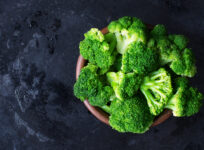
Dr. Monique M.B. Breteler and colleagues from Erasmus Medical Center, Rotterdam, reported that people who consumed very high amounts of dark green, yellow and red vegetables actually appear to reduce their risk of dementia by about 25%.
She based her conclusion on an observational study of dietary patterns among 5,395 volunteers in The Rotterdam Study, a longitudinal study of aging. Dr. Breteler has been following this group since 1990. In that time, 146 people developed Alzheimer’s disease, and another 29 developed dementia caused by stroke. Although everyone in the study was at least 55 at entry, the average age was 69. Risk for Alzheimer’s disease was greatest among those who were older when the study began.
Dr. Breteler attributed the apparent protective effect of the high-vegetable diet to an increased antioxidant intake, and the effect was more pronounced among smokers and among those who carry the Alzheimer’s gene.
While antioxidants such as beta-carotene, vitamin C, and vitamin E appear to be equally protective, she was somewhat surprised to find that flavinoids and other compounds found in fruit had no protective effect. High fruit intake did not seem to reduce risk of dementia.
The clinical significance of these two studies was strongly debated at the meeting. Both Dr. Petot and Dr. Breteler hesitated in making definitive dietary recommendations based on their observations.
Bill Thies, PhD, vice president of medical and scientific affairs for the Alzheimer’s Association, said that there is probably no harm in adopting a low-fat, high-antioxidant diet, and there are certainly cardiovascular benefits. But he insisted that the Alzheimer’s Association is not endorsing dietary strategies as a means of reducing Alzheimer’s risk. Such recommendations would require more definitive support from prospective studies.
But Dr. Robert P. Friedland, chief of the neurogeriatrics laboratory at Case, and a co-investigator with Dr. Petot, is not inclined to wait around. He stressed that both studies point to the same message: a high-fat diet increases oxidative stress and promotes neurologic damage, while a low-fat, high-vegetable diet increases free-radical scavenging and prevents the damage.
He believes it is time to make some general recommendations about preventing Alzheimer’s disease, including the following: eat a diet high in antioxidants; eat fish; avoid high-fat foods; take vitamin E as well as the B vitamins and folic acid; be mentally and physically active throughout life; avoid head injuries; and don’t watch too much TV.
Age and genetics cannot be altered by lifestyle, but he believes the odds can be tipped in a patient’s favor through lifestyle changes that reduce oxidative stress in brain tissue.
THE REDUX: Study of 81 Alzheimer’s disease patients and over 200 controls shows a high-fat diet is associated with a 6-fold increased risk of Alzheimer’s in carriers of the Apo E4 genetic marker. A 5,000 patient 10-year longitudinal study shows vegetable-heavy, antioxidant-rich diet can reduce risk of dementia by about 25%.